
AI 3 хв читання
Shortlist in 10 Minutes: the 2026 Recruiter Workflow Where CV Screening No Longer Eats the Day
 Ilona Yarmolovska
 Application volume is rising, recruiter capacity is shrinking, and manual CV screening no longer holds. Here is how leading teams in 2026 use Document AI to turn resume overload into fast, structured shortlists.
Ilona Yarmolovska 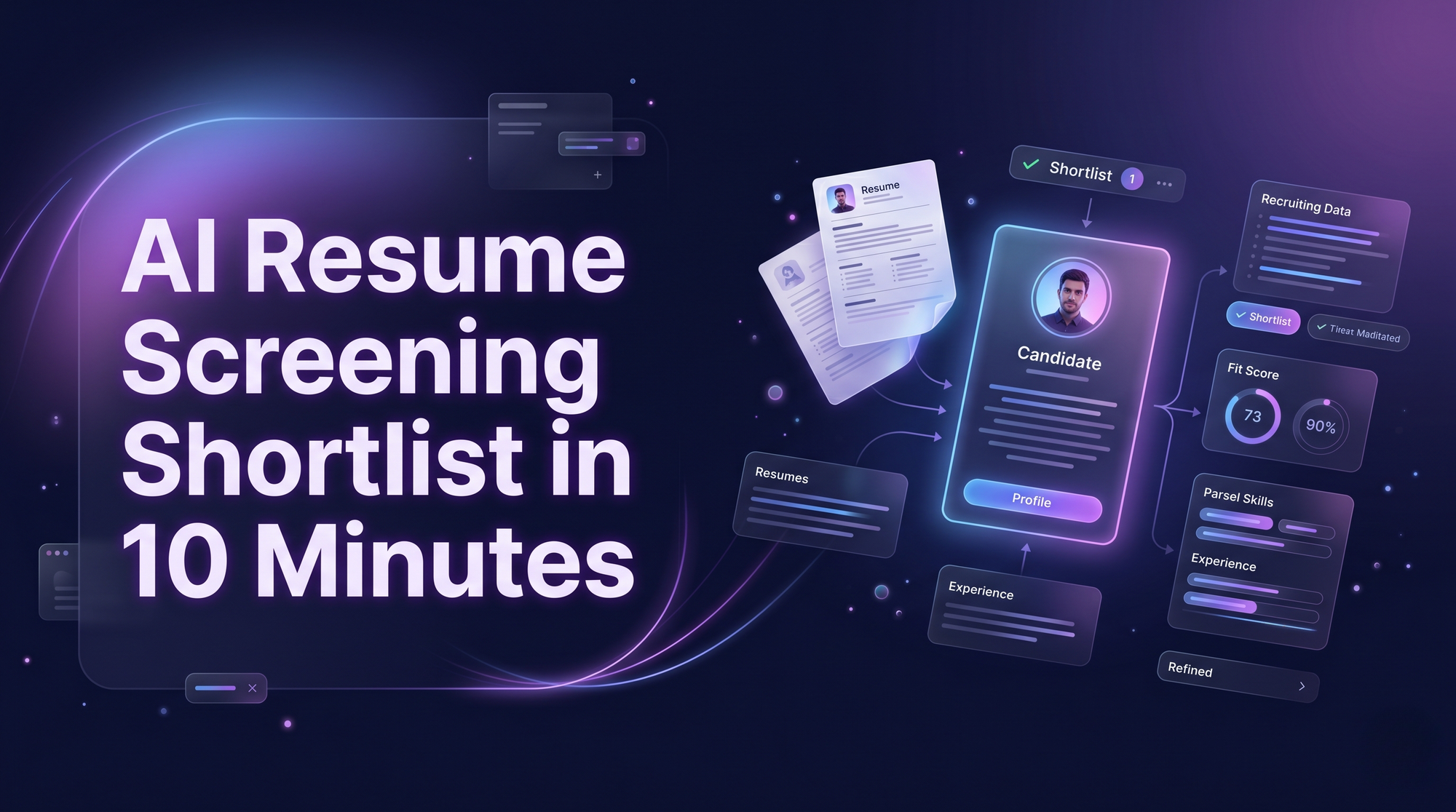
Inbound candidate volume has surged. LinkedIn says companies are seeing as much as a threefold increase in job applicants, citing Ashby data. Ashby also reports 2.6x to 3x growth in applications. At the same time, Gartner found that 39% of candidates used AI during the application process, and 54% of those users used it to generate résumé or CV text. That creates a very different screening reality than teams were dealing with just a few years ago.
Here is the paradox. Hiring teams are dealing with more volume, but not necessarily more clarity. SHRM reports average time to fill at about 41 days, and only 20% of organizations measure quality of hire. Meanwhile, Greenhouse says application volume per recruiter is up 412% while recruiter headcount is down 56%. The result is familiar: more CVs, more work, and a harder path to confident hiring decisions.
What Actually Broke
The old workflow is built around one step: screening. The recruiter opens a CV, reads it, decides. At 60 applications that is two hours of work. At 250 it is a full day. The result is predictable: either the recruiter starts reading faster and worse, or the shortlist gets assembled from the first 30 CVs and the rest are ignored.
Neither option creates value. The first one kills quality-of-hire. The second buries the best candidates in the lower half of the inbox.
What the 2026 Workflow Looks Like
Structurally the new pipeline looks like this:
- A CV arrives in any format: PDF, DOCX, scan, LinkedIn export, email attachment.
- Document AI extracts structured data in 3-4 seconds: experience, stack, locations, rate, availability.
- A matcher runs those fields against the JD and against historical data on who has moved through successfully before.
- The recruiter receives a shortlist of 8-12 candidates, ranked by fit score, with a readable reason for each one.
Total time from inbox to shortlist: 10-14 minutes, regardless of whether the vacancy attracted 60 CVs or 250.
What Recruiters Do with the Six Hours They Get Back
This is where it gets interesting. Deloitte's Global Human Capital Trends 2026 shows the strongest recruiting teams in 2026 reinvest the saved time into three things:
- Reference calls and backchannel checks. The thing everyone always wanted to do and never had time for. It is becoming standard for senior roles.
- Candidate experience matters more when strong candidates have options. Feedback within 48 hours, structured interview recaps, and personal follow-ups are not small details. Greenhouse found that 79% of candidates would reapply if they had received feedback after an interview, even when rejected.
- Culture and team fit. Not as a theory, as an actual conversation with the hiring manager before interview stage.
Every one of these was already in the "senior recruiter" job description. None of them was happening consistently, because there was no time.
What to Check Before You Implement
The EU AI Act hit a key phase in February 2025, and in August 2026 the regulatory sandbox for high-risk AI goes live. Recruiting tools land inside it with both feet. If you are thinking about automating part of the pipeline, check three things:
- Transparency. The candidate must know that a CV was processed by AI and that a shortlist decision involved automated evaluation. This is explicit in Article 26 of the AI Act.
- Bias auditing. The tool has to produce reproducible bias metrics (demographic parity, equal opportunity). Without those, audit is a no-go.
- Human-in-the-loop. AI produces the shortlist. A human makes the offer call. And this has to be documented in the workflow.
IAPP’s recent coverage shows many companies still struggle with the basics of AI governance in HR, especially meaningful human oversight and compliance readiness under the EU AI Act
What This Means in Practice
Recruiting in 2026 splits into two camps. The first keeps doing what it did five years ago, slightly more tired, slightly worse on quality. The second accepts that CV screening is a commodity task and hands it off to document AI. The second camp closes roles faster, makes stronger hires, and (less obviously) does not burn out in 18 months.
At DocStreams we see this shift every day. Our resume processing use case shows teams with 500+ open roles per month moving from "12 hours on screening" to "45 minutes on shortlist review". These are not just saved hours. They are hours freed for the work recruiters actually wanted to do.
If your team is still drowning in CVs, it is worth seeing what a different workflow could look like. Message me and I will walk you through it, no fluff.